Loading...
Serving Jurupa Valley, CA and surrounding areas. (951) 474-5722
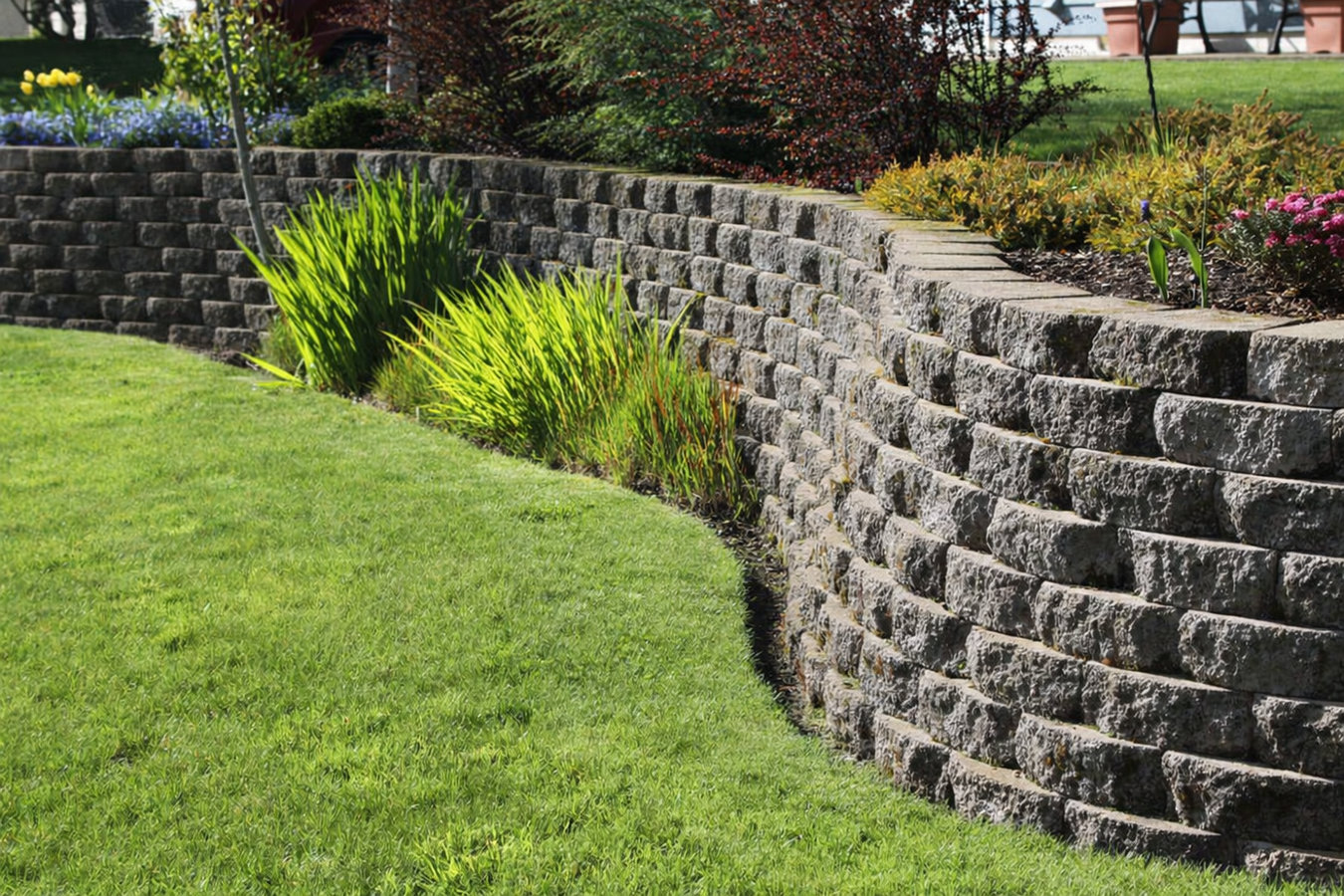
Slopes move, soil erodes, and unretained hillsides get worse after every rainy season. We build retaining walls designed for Jurupa Valley's clay soils and seismic zone requirements.
Retaining wall construction in Jurupa Valley holds back soil on sloped lots so it does not erode, slide, or collapse onto flat areas like your yard, driveway, or home, and most residential walls take two to five days of active work once materials arrive. The wall itself is only part of the project - what keeps it standing is the drainage built behind it and the footing set into stable soil below.
Many homeowners in Jurupa Valley discover their need for a retaining wall after a wet winter exposes how much their slope has been moving. Once a wall is in place, the same grade that was a problem becomes usable flat yard space. We also work with homeowners who want to pair their wall with masonry restoration or concrete block walls on the same project, which reduces mobilization costs.
The University of California Agriculture and Natural Resources notes that retaining walls built without adequate drainage behind them are the most common cause of premature wall failure. On Jurupa Valley's clay soils, drainage is not optional - it is the difference between a wall that lasts decades and one that fails within a few years.
If you notice soil moving down your slope after a winter storm, or small gullies forming in the hillside behind your home, the ground is not stable enough to hold itself. Jurupa Valley's intense winter rain events accelerate erosion quickly on unprotected slopes. A retaining wall stops that process before it reaches your foundation, patio, or neighbor's property.
A wall tilting away from the slope it holds, or one with a noticeable bow in the middle, is under more pressure than it was designed to handle. This is especially common on older walls built on Jurupa Valley's clay soils, where years of swelling and shrinking have shifted the footing. A leaning wall does not fix itself - it will eventually fall, and the resulting damage is far more expensive than proactive replacement.
If water collects against your home's foundation or along the base of a slope after rain, water is running toward your house rather than away from it. On Jurupa Valley's clay soils, this water does not drain quickly. A retaining wall with proper drainage behind it redirects that water before it becomes a foundation problem.
If part of your backyard drops away sharply and leaves you with a narrow usable strip, a retaining wall can create a level area where there was none. Many Jurupa Valley homes on graded lots have rear yards that slope steeply toward a fence line. A well-placed wall can significantly increase the flat space you actually use.
We build retaining walls from new construction through replacement of existing failed walls. Every project starts with a proper footing set into stable soil, not just into the top layer of fill. Behind the wall, we place gravel backfill and drainage pipe so water has a clear exit path rather than building up pressure against the structure. We handle masonry restoration on walls that are structurally sound but show surface deterioration, and we build concrete block walls for homeowners who want an integrated solution for both retaining and boundary functions on the same property.
Material selection depends on height, site conditions, and your aesthetic preferences. Concrete block is the most common choice in this area for its durability and cost efficiency. Natural stone and poured concrete are options for specific applications. We walk you through the tradeoffs before you commit to anything.
For slopes that are unretained or where the existing structure has failed beyond repair.
When an existing wall is leaning, cracking, or no longer structurally sound - replaced from footing to cap.
For walls that are structurally intact but failing due to water buildup behind them - gravel and pipe added without full demolition.
For steep lots requiring multiple shorter walls stepped up the slope, which distributes the load more effectively than a single tall wall.
Jurupa Valley grew rapidly in the 1980s and 1990s on land that was graded and subdivided from hillside terrain. Many homes sit on lots with significant slope changes between the street, the yard pad, and the rear. That means retaining walls here are not decorative - they are often holding back several feet of fill soil that was placed when the neighborhood was built. Fill soil requires extra attention to compaction and drainage compared to walls built against undisturbed natural ground, which is something contractors who are not local to the Inland Empire may not fully account for.
Homeowners in Moreno Valley face the same clay-soil and seasonal conditions as Jurupa Valley, and we serve that area regularly. Homeowners in Corona frequently contact us for walls on hillside lots where the wet-dry cycle has been working on an aging wall for years. The City of Jurupa Valley Community Development Department handles permits for retaining walls, and we are familiar with the local process and timeline.
We respond within one business day and schedule a site visit. We come out to walk your slope, assess the soil, and look at the existing wall if there is one. No numbers are given until we have seen the property in person.
You receive a written estimate covering materials, labor, drainage, and any permit fees before you commit. If your wall is over three feet tall, we flag the permit requirement upfront and include it in the quote so nothing surprises you later.
For walls that require a permit, we submit the application to the City of Jurupa Valley on your behalf. Depending on complexity, the review takes one to three weeks. We coordinate any engineer review that is required - you do not make a call to City Hall.
The crew excavates the footing, builds the wall in level courses, and installs gravel backfill and drainage pipe behind it. A city inspection is scheduled if one is required. Before the crew leaves, we walk the finished wall with you and explain any first-year maintenance steps.
We respond within one business day and give you a written estimate before any work begins.
(951) 474-5722We install gravel backfill and drainage pipe behind every wall we build, not just on request. On Jurupa Valley's clay soils, skipping drainage is the number one reason walls fail within a few years. We do not give clients that option.
We submit the permit application to the City of Jurupa Valley and coordinate any required engineer review. You do not navigate the city's permitting process or find an engineer on your own - we manage that from start to final inspection.
Jurupa Valley sits in a high seismic hazard area in Riverside County, and we build walls to meet California's requirements for earthquake-prone zones. That means proper footings, the right block specifications, and engineer-reviewed designs when the height requires it. American Society of Civil Engineers sets the structural standards we follow on engineered wall designs.
We have worked on retaining walls throughout Jurupa Valley and the surrounding Inland Empire since 2018. We know which neighborhoods have fill slopes, where the clay is worst, and what the city's permit process looks like in practice - not just on paper.
A retaining wall is a structural element, not just landscaping. Every credential we bring - local knowledge, drainage standards, permit management, and seismic compliance - reduces your risk of paying to fix the same problem twice. Other contractors offering retaining wall construction in different regions face the same structural demands, which is why drainage and footing depth are non-negotiable regardless of location.
Repair and restore existing masonry walls that are structurally sound but show surface deterioration from years of weather exposure.
Learn MoreBoundary and privacy walls built with concrete masonry units - often combined with retaining walls on the same graded lot.
Learn MoreEvery rainy season puts more pressure on an unretained slope - contact us today and stop the problem before the next one arrives.