Loading...
Serving Jurupa Valley, CA and surrounding areas. (951) 474-5722
Worn mortar joints let water, heat, and wind into your wall. We remove the old material, pack in matched fresh mortar, and stop the damage before it reaches the brick itself.
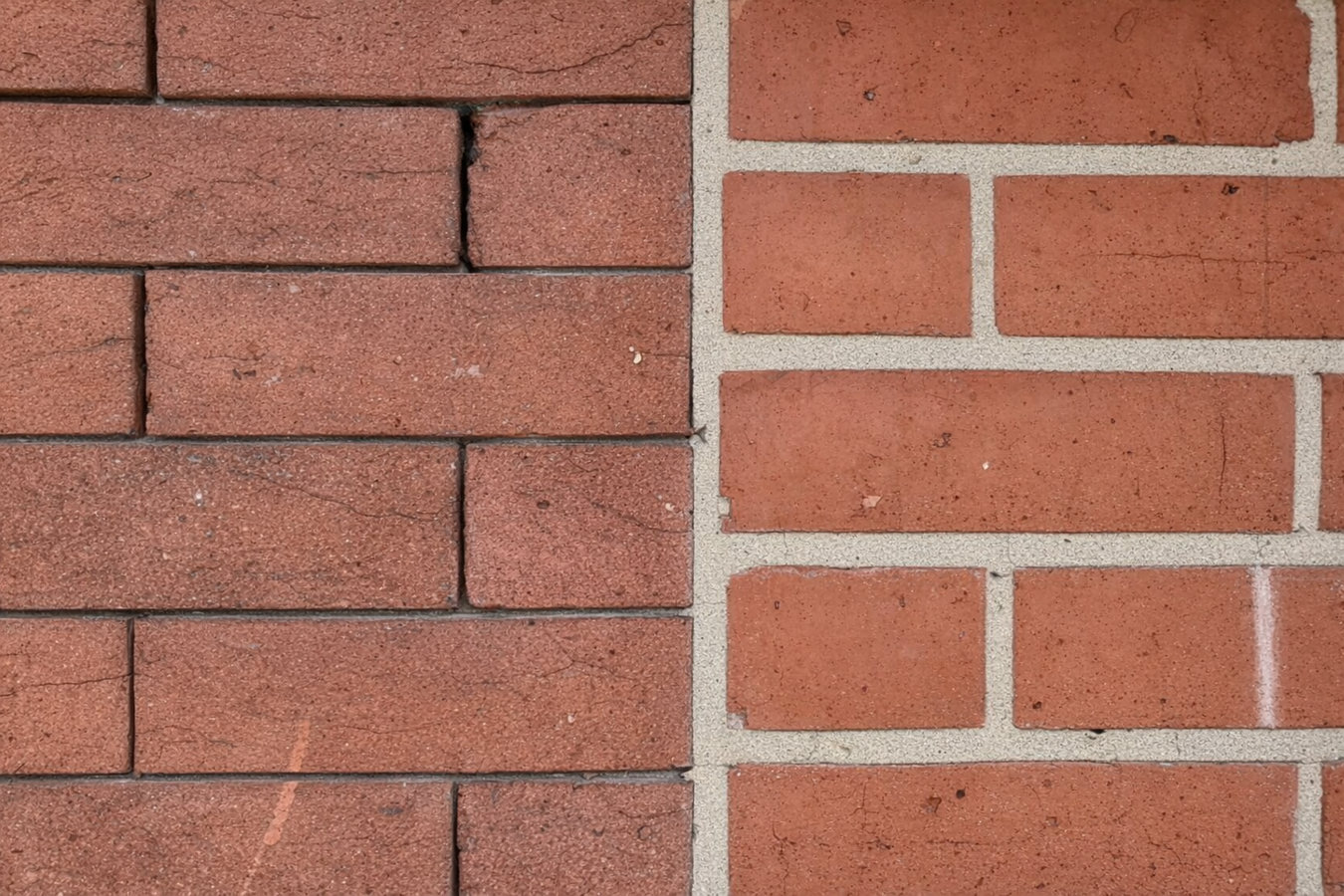
Brick pointing in Jurupa Valley is the process of removing old, deteriorated mortar from the joints between bricks to a depth of about three-quarters of an inch and packing in fresh mortar matched to the existing wall - a small section of damaged joints on one wall might take a single day, while a full chimney repoint typically runs one to two days.
Mortar is designed to be softer than brick - it acts as a cushion that absorbs stress so the bricks themselves stay intact. Over decades, Jurupa Valley's intense heat, seasonal Santa Ana winds, and expansive soils break that mortar down faster than you might expect. Once gaps open up, water gets behind the brick and the problem compounds quickly. Homeowners who also have cracked or spalled bricks alongside failing joints should know that foundation repair is sometimes part of the same conversation - soil movement that opens mortar joints can also stress the foundation, and we can assess both at the same visit.
Catching the problem at the mortar stage is far less expensive than replacing damaged bricks or repairing water-damaged interior walls. A job done correctly with the right mortar mix can last 30 to 50 years before it needs attention again.
Run your finger along the mortar lines on your brick wall or chimney. If the mortar feels soft, crumbles away, or you can see gaps wider than a credit card, the joints need attention. This is the clearest sign that water and wind are already finding their way in.
That white residue - sometimes called efflorescence - forms when water moves through the wall and carries dissolved salts to the surface. In Jurupa Valley's dry climate, this staining often appears after the rainy season ends and the wall dries out. It is a reliable indicator that moisture is entering through failing mortar joints.
South- and west-facing walls in the Inland Empire take the hardest beating from afternoon heat and Santa Ana wind exposure. If your home was built in the 1980s or 1990s and the mortar has not been inspected, the joints on those exposed sides are likely further along in their wear cycle than you would expect.
Press gently on a few bricks in different spots. If any of them move even slightly, or if you notice bricks that look shifted out of alignment, the mortar holding them in place has likely failed. Loose bricks are a safety concern, not just a cosmetic one - this stage needs attention quickly.
We handle brick pointing on walls, chimneys, block structures, and any brick or masonry surface where the mortar joints have deteriorated. Every job starts with the old mortar ground or chiseled out to a consistent depth - shallow surface scraping does not give fresh mortar enough purchase to hold. We mix mortar to match your existing wall color and texture, and we shape each joint to the original profile so the repair sheds water rather than collecting it. For homeowners dealing with related mortar joint work on chimneys or block walls, tuckpointing is a related technique that uses a contrasting color line to create a more refined finish - worth asking about if appearance is a priority alongside the structural repair.
The National Park Service Technical Preservation Services maintains detailed guidance on repointing mortar joints that covers mortar hardness, joint depth, and curing practices - the same principles a skilled mason applies on any residential project, whether the home is a historic landmark or a 1985 tract house in Jurupa Valley.
Suits homeowners with brick boundary walls, garden walls, or exterior block where mortar joints have worn, crumbled, or opened up with age.
Suits homeowners who have noticed crumbling mortar near the roofline or white staining on the chimney exterior after wet weather.
Suits homeowners where damage is limited to a single wall section or a few courses and a full repoint is not yet needed.
Suits homeowners repairing older brickwork who want the new joints to blend in rather than stand out as an obvious patch.
A significant portion of Jurupa Valley's residential neighborhoods were built during the 1970s through 1990s - right at the age when original mortar commonly starts to fail. The city's climate accelerates that timeline. Summer temperatures in the Inland Empire regularly exceed 100 degrees F, which causes mortar to expand and contract repeatedly, and the Santa Ana winds that blow through each fall carry fine grit that gradually wears down exposed joints. South- and west-facing walls take the hardest beating and are the first place to check. Homeowners in Norco face the same conditions and we serve that area regularly with the same approach.
The expansive clay soils found throughout much of Jurupa Valley add another stress factor. Soil that swells during wet winters and shrinks through dry summers puts steady pressure on masonry walls from below - which can open mortar joints faster than weather alone would. If your home has gone through multiple wet-dry cycles without a mortar inspection, particularly in areas like Rubidoux or Glen Avon where older homes sit on larger lots, there is a good chance some joints need attention. Homeowners in Riverside deal with the same soil conditions and we work in that city regularly.
When you reach out, we will ask where the problem is, how old the home is, and whether you have noticed water staining or loose bricks. We schedule an in-person inspection before giving you any numbers - we respond to all inquiries within one business day.
We walk the wall or chimney and check how deep the damage goes, whether any bricks are loose, and whether existing mortar color can be matched. The inspection takes 20 to 45 minutes. You receive a written estimate before any work begins.
Move patio furniture, planters, and anything within a few feet of the wall. Close windows on that side of the house to keep dust out. If a chimney is involved, close the fireplace damper. We handle tools, scaffolding, and all materials from there.
We grind out the old mortar to consistent depth, pack in fresh mortar, and shape each joint to match the original profile. Once the joints are filled, we clean mortar dust off the brick face and walk you through the completed work. Fresh mortar needs 24 to 48 hours before getting wet - we tell you exactly what to avoid.
We inspect the wall in person, tell you exactly what needs to be done, and give you a written quote before any work begins. No obligation.
(951) 474-5722Using mortar that is harder than the surrounding bricks forces stress into the bricks themselves and can cause them to crack or spall. We select and mix mortar to match your existing wall - correct softness, correct color - so the repair works with the structure rather than against it.
Jurupa Valley's hot summers and expansive clay soils accelerate mortar wear faster than national averages suggest. We have repointed brick and block across homes built in the 1970s through 1990s throughout this part of Riverside County and know what conditions to plan for before work starts.
Cosmetic repointing typically does not require a permit in Riverside County. But structural chimney repairs and wall rebuilds do, and finding that out mid-project stalls the job and adds unexpected cost. We check what your specific repair requires before the first tool comes out of the truck.
California law requires a valid contractor license for masonry jobs over $500 in combined labor and materials. You can verify our C-29 masonry license status in about 30 seconds on the California Contractors State License Board website - active license, insurance, and workers' compensation coverage on every project.
Those four factors - correct mortar selection, local climate knowledge, permit clarity, and verifiable licensing - are what separate a brick pointing job that holds up for 30-plus years from a patch that starts failing within a few seasons. You can check our California contractor license status at any time on the California Contractors State License Board website.
Address soil movement and structural settling that can be the underlying cause of opening mortar joints and cracked brickwork.
Learn MoreRestore the appearance and weather resistance of chimney and wall joints with a contrasting finish line for a more refined look.
Learn MoreSpring and fall book fast in the Inland Empire - reach out now before the summer heat makes scheduling harder and mortar curing more difficult.