Loading...
Serving Jurupa Valley, CA and surrounding areas. (951) 474-5722
Stop replacing rotted fence boards every few years. A properly built concrete block wall handles the Inland Empire heat, the Santa Ana winds, and the clay soil cycle - and it will still be standing long after wood is gone.
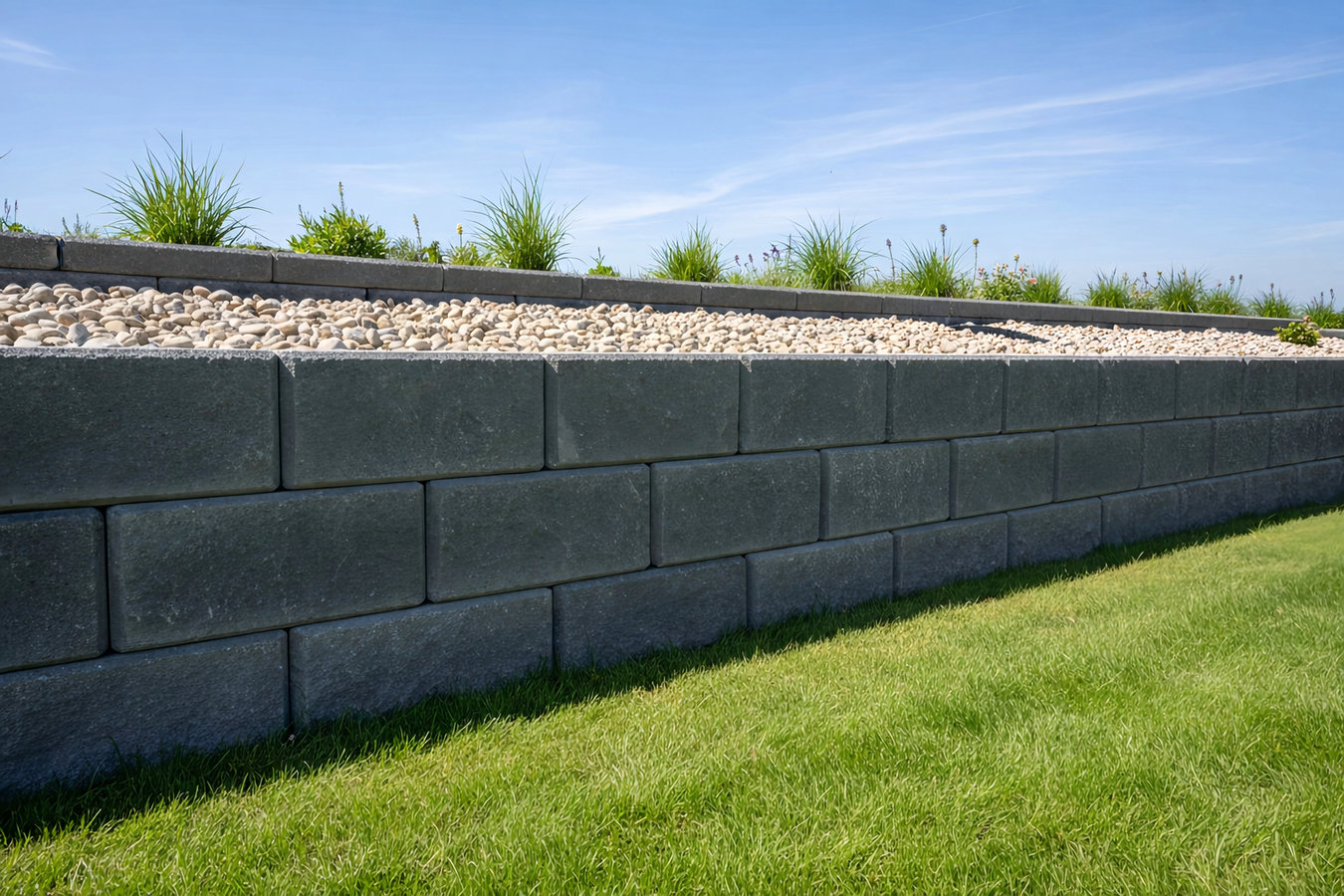
Concrete block wall construction in Jurupa Valley involves digging a concrete footing, stacking reinforced block courses with mortar, and filling cores with steel and poured concrete where seismic code requires it - most standard residential walls take a crew two to four days of block work after the footing cures.
Block walls in this area have to handle more than just gravity. Jurupa Valley's clay soils shift with every rainy season, the ground is in a mapped seismic hazard zone, and summer heat can weaken mortar that is not properly managed on the day of the pour. All three of those factors affect how the footing is sized and how the wall is reinforced. If you are also considering a retaining wall on a sloped section of your property, we can assess both at the same visit and coordinate the work.
Most homeowners who call us have already replaced a wood fence at least once. The cost comparison between repairing wood every few years and building a concrete block wall that lasts 50 years or more usually makes the block wall the better investment - and you stop dealing with the maintenance.
If you can see diagonal cracks running through the blocks or mortar joints, or if the wall looks like it is tilting, the footing or interior reinforcement has likely been compromised. In Jurupa Valley, this often happens to older walls built before current seismic reinforcement standards or on lots with expansive clay soil that was never properly accounted for. A leaning wall is a safety hazard that can fall without much warning.
If you have a sloped yard and notice soil creeping downhill after rain, pooling at the base of a slope, or eroding away from fence posts, a retaining wall is likely what you need. Jurupa Valley gets intense, short-duration winter rainstorms that can move a surprising amount of soil in a single event. A concrete block retaining wall stops that movement and protects both your landscaping and your neighbor's property.
Wood fences in the Inland Empire take a beating from the heat, the Santa Ana winds, and the dry-wet soil cycle. If you have replaced fence boards or reset posts more than once in the past few years, switching to a concrete block wall is worth considering. Block walls do not rot, do not warp in the heat, and hold up to wind far better than wood.
Run your finger along the mortar lines between blocks. If the mortar crumbles, flakes, or has gaps you can press a finger into, water is getting inside the wall. Over time, that moisture weakens the structure from the inside - especially in Jurupa Valley, where summer heat bakes the wall and winter rain soaks it in alternating cycles. Catching this early with a repair job can save you from a full replacement.
We build new concrete block walls from scratch and repair or repoint existing ones. New wall projects start with a concrete footing poured below grade on stable, undisturbed soil - this is the part most homeowners never see, but it is what determines whether the wall is still plumb in ten years or starting to lean. We size the footing for Jurupa Valley's clay soil conditions, not just the minimum the code requires. Steel reinforcement and filled cores are standard where seismic requirements apply, which for taller walls in this part of Riverside County means essentially every project. If you need a wall that also holds back soil on one side, see our retaining wall construction service for the additional design considerations that apply.
For existing block walls showing crumbling mortar, diagonal cracks, or early lean, repointing and repair can extend the wall's life significantly without a full rebuild. We assess whether repair is the right call or whether the footing has been compromised to the point where a new wall is the more cost-effective path. We also pair block wall work with foundation block wall installation when a project involves structural wall systems at the foundation level.
Suits homeowners who want a permanent, low-maintenance boundary that holds up to wind and heat better than wood fencing.
Suits homeowners with sloped lots who need to stop soil movement, create usable yard space, or protect a neighbor's property.
Suits homeowners who want to define outdoor zones - planting areas, seating areas, or yard sections - with a durable, finished structure.
Suits homeowners with existing block walls showing crumbling mortar joints or early signs of settling who want to extend the wall's life.
Jurupa Valley incorporated in 2011 and runs its own building permit process through its Community Development Department - separate from Riverside County. That matters because permit timelines, fees, and inspection scheduling are specific to the city. Homeowners in Norco and Eastvale nearby deal with different permit offices, and we work across all three. We factor permit processing time into every project timeline from day one so you are not caught off guard by a two-week wait before work can start.
The clay soil conditions in Jurupa Valley are well-documented in this part of Riverside County. A wall footing that would be adequate in a sandy or loam soil environment can crack or heave here within a few years if the footing depth and width were not sized for expansive soil behavior. Combine that with a seismic hazard zone designation that requires reinforced cores on taller walls, and you have a project where cutting corners on the structural elements is not just sloppy work - it is a safety liability. We do not skip either consideration.
For seismic reinforcement requirements in this region, see the Masonry Institute of America. For permit and inspection requirements, contact the Jurupa Valley Community Development Department or verify any contractor's license at the California Contractors State License Board.
We ask how long the wall needs to be, how tall, whether it must hold back soil, and whether you have an HOA. You do not need all the answers - just describe what you are trying to accomplish.
We visit your property to measure, check slope and soil conditions, and walk through your options. This is the right time to ask about permits - we tell you upfront whether your project requires one and include permit fees in the written estimate.
We file for the permit with Jurupa Valley's Community Development Department - this typically takes one to three weeks. Once approved, you get a firm start date and a clear list of what to have ready before we arrive.
We dig the trench, pour the concrete footing, and lay blocks row by row with seismic reinforcement where required. For permitted projects, the city inspector visits before the permit is closed out - we coordinate that visit for you.
We reply to all estimate requests within one business day. Your estimate is written and itemized - no lump-sum guesses and no obligation to proceed.
Written itemized estimate after a site visit. Permit fees included. We reply within one business day.
(951) 474-5722Jurupa Valley's clay soils swell and shrink with every rainy season, and that movement has toppled plenty of walls that were not built to handle it. We design every footing and reinforced core with the local soil behavior in mind, so your wall stays straight year after year.
Southern California's earthquake risk means taller block walls require steel rebar and filled concrete cores. We build to California's seismic requirements on every eligible project and pull every required permit - your wall is documented, approved, and fully legal.
Jurupa Valley incorporated in 2011 and runs its own Community Development Department separate from Riverside County. We know the local permit process, timelines, and inspection requirements, so you do not have to track down a city office you have never dealt with.
Many Jurupa Valley subdivisions - particularly those near Eastvale and along major corridors - have HOA rules governing wall height, cap style, and block color. We have worked in enough of these neighborhoods to help you understand what is likely to get approved before you spend a dollar on permits.
We have been building block walls in the Inland Empire since 2018, and every project starts with an honest site assessment of the soil, the slope, and what the permit process requires. Contact us to schedule your free on-site estimate.
Block wall systems installed at the foundation level for structural support and below-grade perimeter work.
Learn MoreEngineered retaining walls on sloped lots to stop soil movement and create usable yard space.
Learn MorePermit slots fill up fast. Locking in your start date now means your wall is done before the next rainy season hits.