Loading...
Serving Jurupa Valley, CA and surrounding areas. (951) 474-5722
Cracked bricks and failing mortar do not stay small in this climate. We assess the damage, find what caused it, and repair it so the problem does not come back next season.
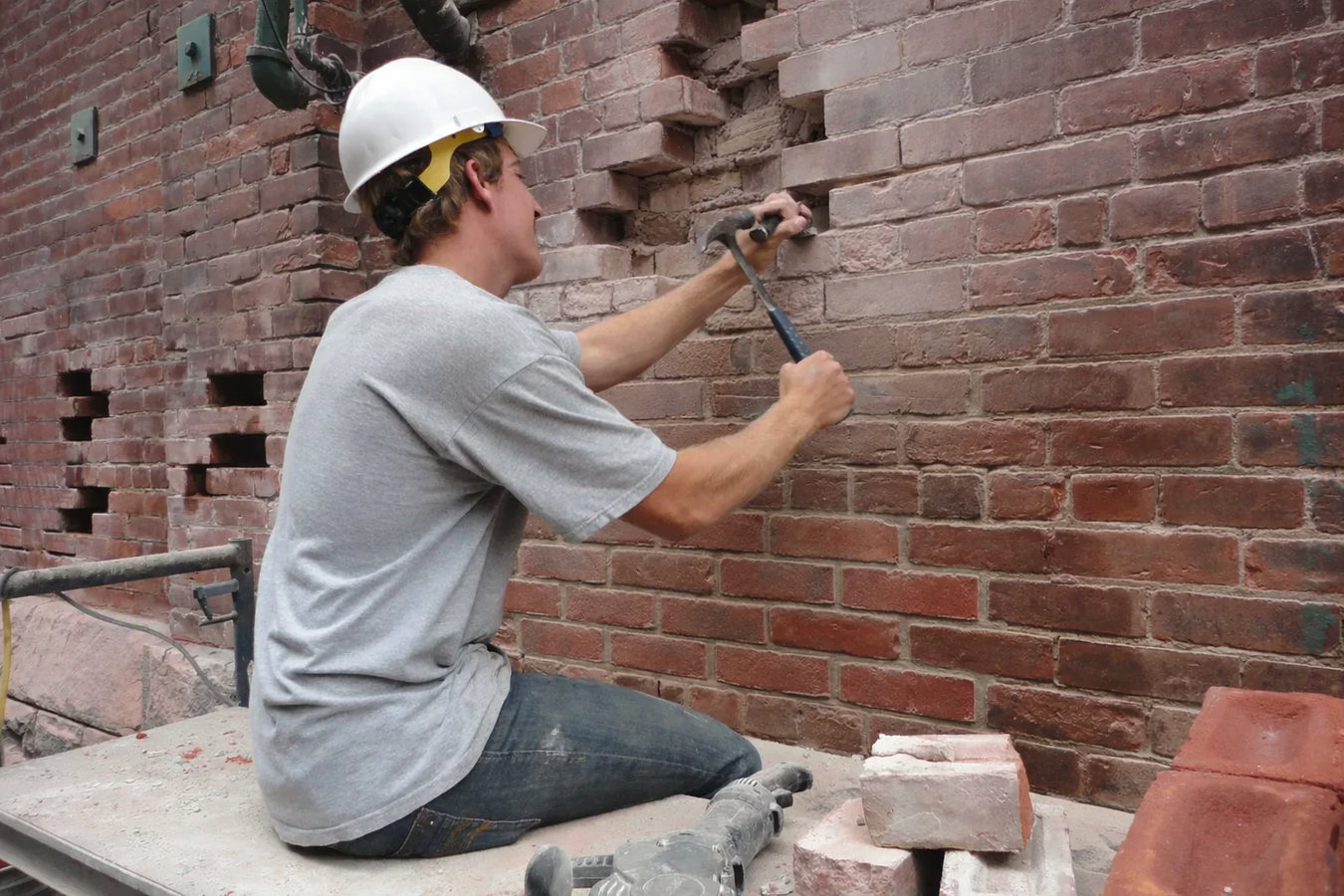
Brick repair in Jurupa Valley covers everything from replacing cracked individual bricks to repointing worn mortar joints, with most patch jobs completed in a single day and larger wall repairs taking two to three days.
You do not need to replace the whole wall for most problems. A skilled mason can fix just the damaged area and leave the rest untouched. The key is catching damage before water gets in behind the brick face and starts working on what is behind it. In Jurupa Valley, where summer temperatures regularly hit triple digits and winter rains arrive fast after a long dry stretch, that wet-dry cycle accelerates how quickly small brick problems become large ones.
If the mortar between your bricks is the main issue rather than the bricks themselves, our masonry restoration service handles broader scope work on walls and structures that need more than spot repair. And if your brick features are part of an older wall or planter that has seen decades of use, a full restoration may extend the life of the structure far beyond what a patch would provide.
Run your finger along the lines between your bricks. If the mortar crumbles, flakes off, or has gaps you can push your finger into, it is no longer doing its job. This is the most common sign that repointing is needed - catching it here keeps water out before it causes damage behind the wall face.
Cracks that run diagonally in a stair-step pattern through the mortar joints are common in Jurupa Valley because the clay-heavy soils here swell and shrink with the seasons. A mason should assess these soon - diagonal cracking can mean the footing beneath the wall also needs attention, not just the mortar surface.
White, chalky residue on the face of your bricks is called efflorescence. It is salt being pushed out of the brick or mortar by moisture moving through the wall. In Jurupa Valley this often shows up after the winter rainy season on walls with weakened mortar joints - it is a sign water is getting in somewhere.
Press gently on individual bricks. If any move, rock slightly, or sit noticeably out of line with the surrounding brick, the mortar holding them has failed. Loose bricks on retaining walls, planters, and chimneys are a safety concern - especially given the ground movement that Jurupa Valley's clay soils produce.
Our brick repair work covers the full range of residential masonry damage - repointing joints where mortar has worn out, replacing individual bricks that have cracked or spalled beyond what mortar work can fix, and rebuilding sections of wall where multiple bricks and their surrounding joints have deteriorated together. We also handle chimney crown repairs, brick planter rebuilds, and retaining wall patch work. Where a full wall has significant damage, our masonry restoration service provides a more comprehensive scope that goes beyond patching.
Mortar matching is part of every job. Using the wrong mortar mix is one of the most common mistakes in brick repair - mortar that is too hard for older brick traps moisture and can cause the bricks themselves to crack over time. We assess the existing mortar before mixing anything new. The National Park Service Preservation Briefs cover mortar compatibility principles that guide how we approach work on older masonry - especially relevant for the 1970s and 1980s homes common in Jurupa Valley.
Suited to walls where the bricks are intact but the mortar joints have crumbled or recessed and water is getting in.
For bricks that have cracked, spalled, or shifted loose and can no longer be held by fresh mortar alone.
Addresses cracked crowns, damaged mortar joints, and loose bricks on chimney stacks before water enters the flue.
Fixes sections of garden walls, retaining walls, and planters showing soil-movement damage or failed mortar.
A large share of Jurupa Valley's residential neighborhoods were built between the 1970s and 1990s, which means many homes now have brick planters, retaining walls, chimneys, and decorative facades that are 30 to 50 years old. Mortar from that era has reached - or in many cases passed - the end of its natural lifespan, and the Inland Empire's temperature swings have accelerated that breakdown. Homeowners in the older sections of the city, including areas around Rubidoux and Pedley, are especially likely to have original brickwork that has never been inspected. We serve these neighborhoods as well as homeowners in Riverside and Rialto.
The Santa Ana wind events that roll through the Inland Empire in fall and winter drive dry, hot air through the region and can stress already-weakened mortar joints. When the rainy season follows, water enters those weakened joints quickly. This wet-dry cycle is particularly hard on older brick features, and homeowners often notice new damage in late winter or early spring after the rains have passed. Getting a repair scheduled in fall - before the rains arrive - is the right time to address damage you noticed during the summer. Homeowners in HOA-governed communities should also check mortar color requirements before scheduling, since visible exterior repairs may need to meet association standards.
Tell us where the damage is and roughly how large the affected area looks. You do not need to know all the answers - just describe what you see. We respond within one business day to schedule the in-person visit.
We look at the damaged area up close, check the surrounding masonry, and assess whether there is an underlying issue like soil movement or drainage that needs to be factored into the repair plan.
You receive a written estimate explaining what will be done, what materials will be used, and the total cost. We explain the mortar color match plan and answer your questions before scheduling the work day.
The crew removes damaged mortar or bricks, cleans the area thoroughly, and applies new material. Before leaving, we walk the finished repair with you and explain the curing window - keep water away for 24 to 48 hours.
We respond within one business day. Free estimates on brick repair throughout Jurupa Valley and surrounding Inland Empire communities.
(951) 474-5722Brick damage in Jurupa Valley often has a root cause - soil movement, drainage, or age-related mortar failure. We identify what actually drove the damage before recommending a fix, so the repair addresses the problem rather than just covering it.
Jurupa Valley Masonry and Concrete holds a valid California contractor license, verifiable at the Contractors State License Board website. That license is your protection - work done by an unlicensed contractor leaves you without recourse if a repair fails or causes additional damage.
We assess the existing mortar type before mixing anything new. Using mortar that is harder than the surrounding material is a common mistake that causes bricks to crack over time. The repair we make today will not create a new problem six months from now.
We have worked on brick and block features throughout the older Jurupa Valley neighborhoods where the housing stock is 30 to 50 years old - the same homes where original mortar is now at or past the end of its service life. We know what to expect here.
A brick repair done right the first time costs less than fixing the same problem twice. Call or submit an estimate request and we will tell you honestly what your wall needs - and what it does not.
Pavers for driveways and entries that hold up to Jurupa Valley's heat and soil movement better than a standard poured slab.
Learn MoreComprehensive restoration for brick and stone structures that need more than a patch - rebuilding sections, cleaning, and re-sealing the full surface.
Learn MoreCall today or request a free estimate and we will tell you exactly what is wrong and what it will take to fix it right.